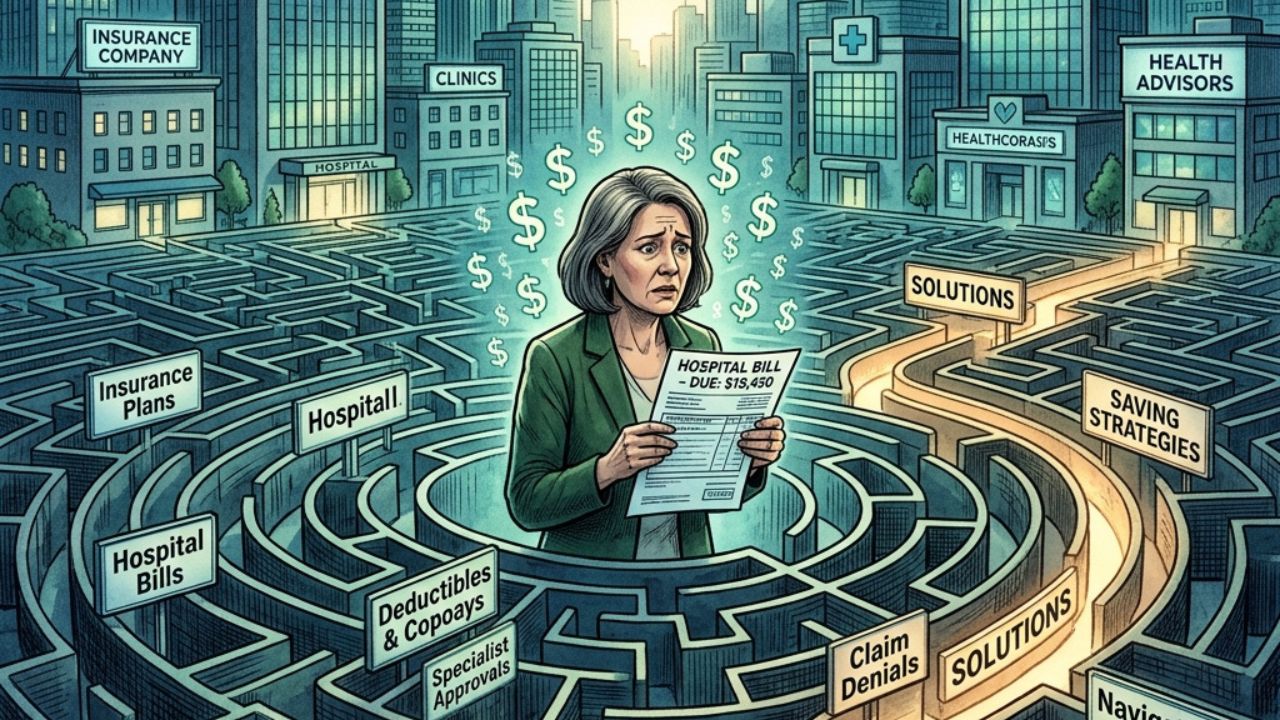
Medical debt is a uniquely American crisis. Millions of people across the country face financial ruin simply because they got sick or injured. Medical expenses are the leading cause of bankruptcy in the United States, leaving families overwhelmed by complex billing systems and insurance jargon. When a single hospital stay can generate a bill larger than a mortgage, understanding how to navigate the healthcare system is a financial necessity.
Many patients assume that having health insurance means they are fully protected. Unfortunately, coverage gaps, out-of-network charges, and high deductibles often result in massive out-of-pocket expenses. Learning the rules of the game can mean the difference between an affordable copay and an insurmountable debt.
This guide breaks down the complexities of the US healthcare system. We will explore how health insurance works, how to decode confusing hospital bills, and proven strategies to reduce your expenses before, during, and after a hospital visit.
Understanding the US Healthcare System
The American healthcare system is a fragmented network of private businesses, government programs, and healthcare providers. Unlike countries with universal healthcare, the US relies heavily on employer-sponsored insurance and a profit-driven medical industry.
There are four key players in this ecosystem: patients, healthcare providers (hospitals and doctors), insurance companies, and government programs. Insurance companies act as middlemen, negotiating rates with hospitals on behalf of their members.
Hospitals use a document called a “chargemaster,” which is an exhaustive list of the maximum prices for every single procedure, pill, and service they provide. These chargemaster prices are highly inflated. Insurance companies negotiate steep discounts on these rates. Uninsured patients, or those receiving out-of-network care, are often billed the full chargemaster price, leading to astronomical bills.
Health Insurance 101
To avoid unexpected bills, you need a firm grasp of your health insurance policy. Different plans offer different levels of flexibility and cost.
Types of health insurance plans
- HMO (Health Maintenance Organization): Requires you to use doctors and facilities within a specific network. You usually need a referral from a primary care physician to see a specialist.
- PPO (Preferred Provider Organization): Offers more flexibility. You can see specialists without a referral and visit out-of-network providers, though staying in-network costs less.
- EPO (Exclusive Provider Organization): Similar to an HMO but generally does not require referrals for specialists. However, it offers no out-of-network coverage outside of emergencies.
- HDHP (High Deductible Health Plan): Features lower monthly premiums but higher deductibles. These are often paired with a Health Savings Account (HSA).
Key terms to know
Your premium is the amount you pay every month just to keep your insurance active. Your deductible is the amount you must pay out of your own pocket before your insurance starts covering costs. A copay is a fixed flat fee for a specific service, like a $20 charge for a doctor’s visit. Coinsurance is a percentage of costs you share with your plan after hitting your deductible. Finally, your out-of-pocket maximum is the absolute cap on what you will pay in a given year. Once you hit this limit, your insurance pays 100% of covered benefits.
When choosing a plan, carefully weigh your medical needs. If you have chronic conditions requiring frequent care, a higher premium plan with a low deductible usually saves you money. If you are generally healthy, an HDHP might make more sense.
Navigating Hospital Bills
Hospital bills are notoriously confusing. They rarely arrive as a single document, and they are filled with confusing medical codes.
Deconstructing a hospital bill
When you receive a hospital bill, you are looking at charges tied to specific Current Procedural Terminology (CPT) codes. These codes dictate exactly what you are being charged for. Hospitals often separate facility fees (the cost of the room and equipment) from professional fees (the doctor’s time).
The Explanation of Benefits (EOB)
Before paying any medical bill, wait for your insurer to send an Explanation of Benefits (EOB). The EOB is not a bill. It is a statement showing what the hospital charged, what the insurance company agreed to pay, and what you owe. Compare your hospital bill to your EOB. If the numbers do not match, do not pay the bill yet.
Identifying common billing errors
Up to 80% of hospital bills contain errors. Common mistakes include double billing (charging twice for the same service), unbundling (charging separately for procedures that should be grouped together), and upcoding (billing for a more expensive service than the one you actually received).
Strategies to Save Money Before Hospitalization
The easiest way to save money on hospital bills is to avoid the hospital entirely when possible.
Preventive care and wellness programs
Under the Affordable Care Act, most insurance plans cover preventive services like annual physicals, vaccinations, and cancer screenings at absolutely no cost to you. Catching health issues early prevents expensive treatments later.
Urgent care vs. emergency room
Emergency room visits cost an average of $2,000, even for minor issues. If your condition is not life-threatening, visit an urgent care clinic instead. Urgent care visits typically cost a fraction of an ER bill and have much shorter wait times.
Generic prescriptions
Prescription drugs are a major medical expense. Always ask your doctor if a generic version of your medication is available. You can also use pharmacy discount apps to find coupons that occasionally beat your insurance copay prices.
HSAs and FSAs
If you have an HDHP, open a Health Savings Account (HSA). Your contributions are tax-deductible, the money grows tax-free, and withdrawals for qualified medical expenses are tax-free. Flexible Spending Accounts (FSAs) offer similar tax benefits but usually require you to spend the funds by the end of the year.
Strategies to Save Money During Hospitalization
If you find yourself admitted to the hospital, you still have options to control your costs.
Ask for an itemized bill
Never pay a summary bill. Ask the billing department for a fully itemized bill that lists every single charge and its corresponding CPT code. Simply requesting this document often prompts the billing department to find and remove errors.
Negotiate charges
Hospitals expect patients to negotiate. If you are uninsured or facing a massive out-of-pocket balance, call the billing department. Offer to pay a lump sum at a discounted rate, or ask them to lower the bill to the Medicare rate for your procedure.
Utilize patient advocates
If your bill is overwhelmingly large and complex, consider hiring a medical billing advocate. These professionals know the healthcare system inside and out. They will audit your bill for errors, negotiate with the hospital, and handle insurance appeals on your behalf. They usually charge an hourly fee or take a percentage of the money they save you.
Strategies to Save Money After Hospitalization
The arrival of a massive hospital bill does not mean you are out of options. There are several steps you can take to reduce the financial burden after you go home.
Appealing insurance denials
Insurance companies deny millions of claims every year. Sometimes they deny a claim because of a simple coding error made by the hospital. If your insurance refuses to pay, file an appeal. Call your insurance provider, find out exactly why the claim was denied, and work with your doctor to submit the necessary documentation to overturn the decision.
Setting up payment plans
If you cannot afford your bill, do not ignore it. Hospitals will eventually send unpaid bills to collections, which ruins your credit score. Instead, call the billing department and ask for an interest-free payment plan. Most hospitals are willing to let you pay off your balance over several months or years.
Financial assistance programs
Non-profit hospitals are legally required to offer financial assistance, often called “charity care,” to low-income patients. Even if you have insurance, you might qualify for a massive reduction or complete forgiveness of your bill based on your income. Check the hospital’s website for their financial assistance policy.
Avoid medical credit cards
Hospitals frequently encourage patients to sign up for medical credit cards to cover their balances. Be extremely careful with these. While they often offer introductory zero-interest periods, failing to pay the balance in full before the period ends triggers massive retroactive interest charges.
Special Considerations
A few unique situations require extra attention to protect your finances.
Out-of-network care
Seeing an out-of-network provider usually means you will pay the bulk of the cost. Always verify that your surgeon, anesthesiologist, and facility are all in-network before scheduling an elective procedure.
The No Surprises Act
Effective January 2022, the No Surprises Act protects patients from unexpected out-of-network bills for emergency services. It also protects you if you receive treatment at an in-network facility from an out-of-network provider (like an ER doctor or anesthesiologist) without your prior consent.
Medicare and Medicaid
If you are over 65, disabled, or meet certain low-income requirements, you may qualify for government health programs. Medicare and Medicaid offer robust coverage that drastically reduces out-of-pocket costs. Ensure you understand the enrollment periods to avoid late penalties.
Take Control of Your Healthcare Finances
The American healthcare system is undeniably complicated, but you are not powerless. By understanding your insurance policy, thoroughly checking your medical bills, and knowing your legal rights, you can protect yourself from financial ruin. Treat your healthcare expenses exactly as you would any other major financial transaction. Ask questions, demand itemized receipts, and never hesitate to negotiate.